Menu
404 . 312 . 7615
info@firstmountainwoodcraft.com
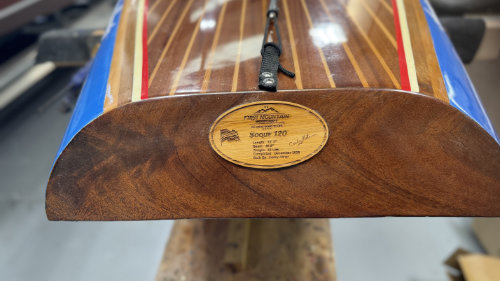
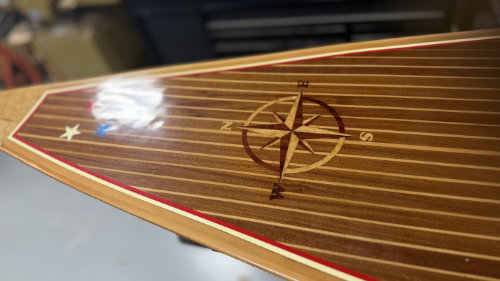
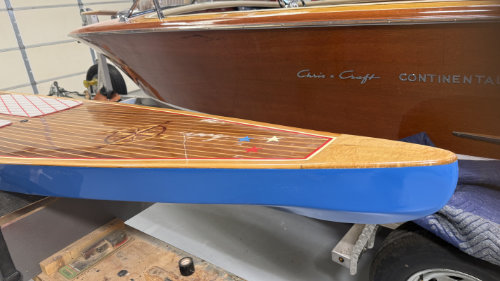
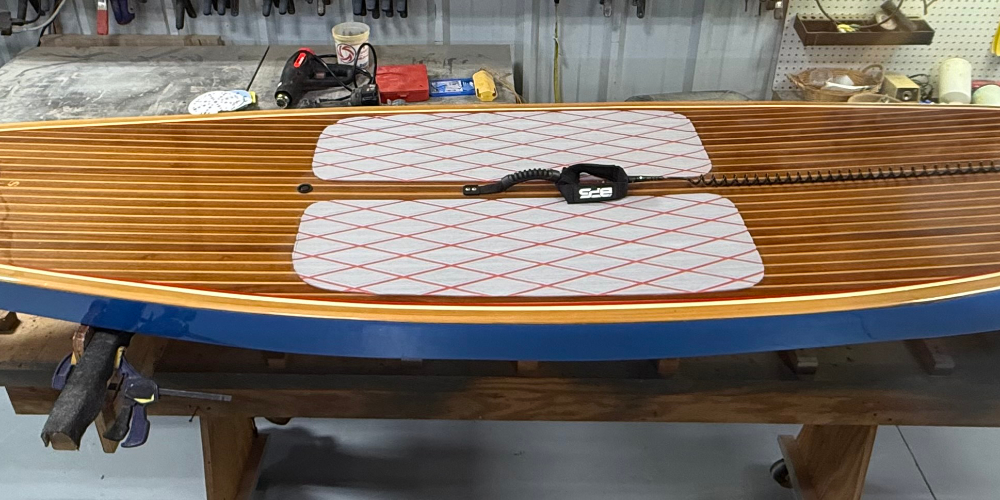
12’ pebble board. Mahogany stripped top. The idea came from restoring a 1956 Chris Craft Continental.
The 1956 Chris-Craft Continental isn’t a canoe — it’s a classic American wooden powerboat built in the mid-20th century by the legendary Chris-Craft company. Today, it’s considered an icon of vintage boating and a prized collectible among classic boat enthusiasts. Here’s a thorough deep dive into what makes this model special, its history, construction, performance, variations, and why it’s still loved nearly 70 years after it was first produced.
The Chris-Craft Continental was a line of mahogany-hulled runabouts and cruisers produced during the 1950s — with 1956 being one of the key production years. Chris-Craft built them as quality cruising boats designed for families, lake outings, and coastal pleasure boating. Instead of being canoe-like, these boats are powerboats with inboard engines, classic styling, and rich wood craftsmanship.
The Continental models from 1956 came in multiple sizes, often ranging from around 18 feet to 28 feet in length, each tailored for slightly different uses — from smaller family cruisers to larger, more luxurious runabouts.
Chris-Craft was one of the most influential boat builders in the U.S. in the 20th century. By the 1950s, the company had already established a reputation for beautiful craftsman-built wooden boats that combined aesthetics with performance. The Continental was part of this tradition — embodying post-war American leisure culture when families were spending more time on lakes and inland waters.
While exact production numbers vary by size, sources indicate that certain Continental models were fairly limited in production, making surviving examples rare and sought-after today. For example, one listing notes that only 221 units were made between 1955–1957 for a specific length variant, underlining their collectible nature.
One of the standout features of the 1956 Continental is its wooden hull — typically mahogany planking over hardwood frames — giving the boat a warm, classic look and excellent strength. Many examples have modified-V planing hullsthat provide better handling and performance compared with flat-bottom boats.
Key design elements include:
Beyond aesthetics, boat owners often modernize their Continentals with fiberglass or no-soak bottoms to reduce maintenance while preserving the exterior wood look — a nod to both durability and heritage.
Specifications varied by length and owner customization, but a representative example from a 23-foot Continental gives a good sense of what these boats were like:
Other versions included Hercules inline-six engines producing around 150 HP on smaller models and even modern upgrades like a Mercruiser 5.7 EFI Vortec 325 HP on larger restorations.
Many 1956 Chris-Craft Continentals today are either restored classics or projects:
Restoration can be a labor of love because wooden boats require regular maintenance — including varnish, anti-soak sealing, and careful winter storage — to prevent rot and preserve beauty.
The 1956 Chris-Craft Continental remains valued for several reasons:
Far from being a canoe, the 1956 Chris-Craft Continental is a classic wooden powerboat that blends craftsmanship, performance, and timeless styling. Available in various lengths (often between 18′ and 28′), it was designed as a cruiser and runabout, with inboard powerplants and elegant wood finishes. Today it’s a cherished collector’s piece — restored for shows or modern-upgraded for pleasure cruising — and remains one of the most admired products from Chris-Craft’s golden era.